

Best Practices for Implementing AI-Powered Ledger Reconciliation
Traditional financial close cycles are collapsing under the weight of manual data entry. According to recent industry analyses, finance teams spend up to 40% of their month-end close time on reconciliation tasks that are prone to human error. This inefficiency is no longer just a bottleneck; it is a critical risk to financial integrity. The shift toward autonomous operations is not a trend but a necessity for modern enterprises seeking accuracy and speed.
Understanding AI-Driven Reconciliation
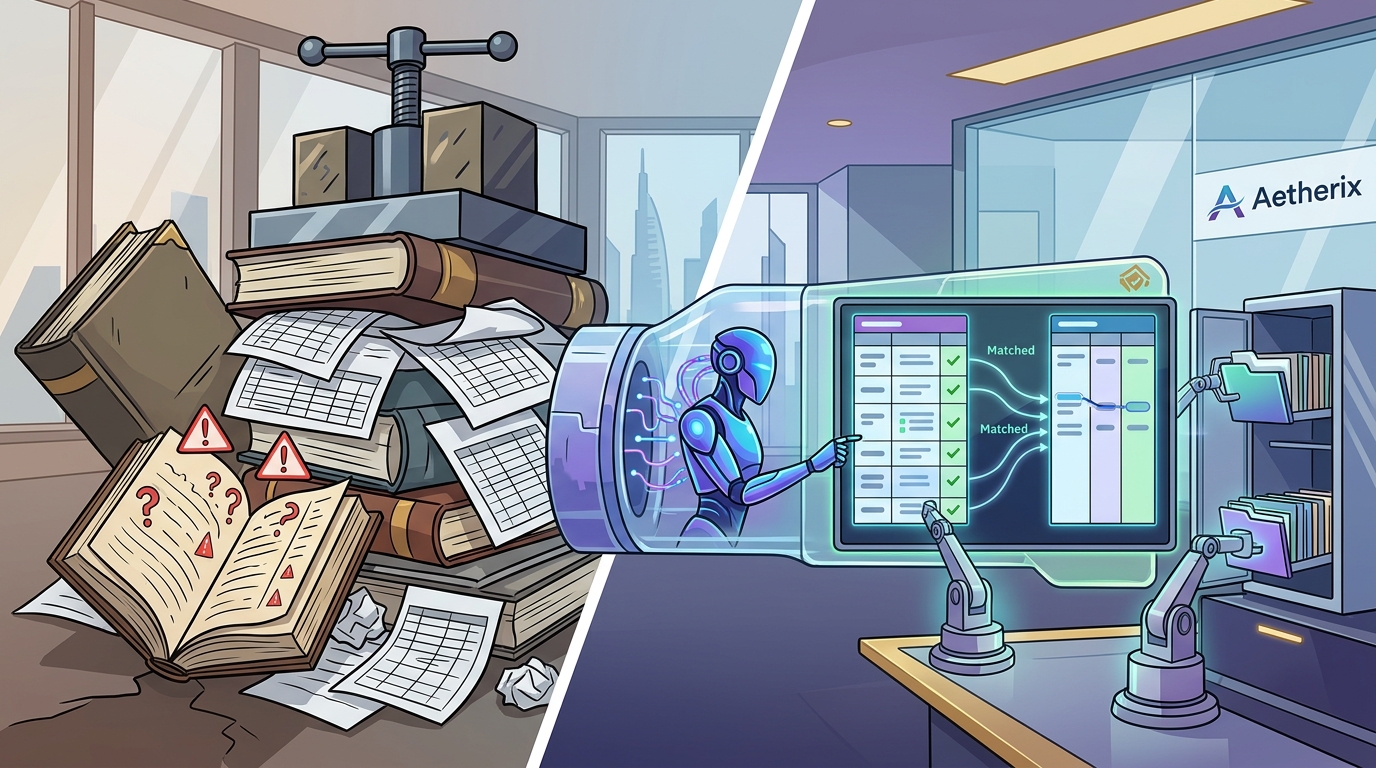
Reconciliation is the process of ensuring that two sets of records agree. In a financial context, this usually means matching internal ledger entries against external statements from banks, custodians, or vendors. AI-powered reconciliation utilizes autonomous agents to perform this matching, investigation, and resolution without constant human intervention.
Unlike traditional rule-based software that fails when exceptions arise, AI agents can reason through discrepancies. They investigate breaks, chase source documents, and propose resolutions based on historical patterns and contextual data. This capability transforms reconciliation from a reactive, manual task into a proactive, automated workflow.
For family offices, investment managers, and financial institutions, this means faster close cycles and higher accuracy. The goal is not just to match transactions but to provide a clean, auditable close with full reasoning trails for every action taken.
Data Ingestion and Integration
The foundation of any successful AI reconciliation system is robust data ingestion. Agents must pull data from diverse sources, including custodians, banks, and internal ledgers, in real-time or near-real-time.
Multi-Source Connectivity
Enterprises often operate across multiple platforms. Best practices dictate integrating with major ERP systems such as NetSuite, Sage Intacct, QuickBooks, and Microsoft Dynamics. Additionally, connecting to expense management tools like Bill.com and Ramp ensures that vendor invoices and expense reports are captured accurately.
Seamless integration reduces the latency between transaction occurrence and reconciliation. This immediacy allows teams to identify and resolve breaks before they compound, preventing end-of-month chaos.
Data Normalization
Data from different sources often arrives in varying formats. AI agents must normalize this data into a unified schema before attempting to match. This step involves standardizing dates, currencies, and transaction codes. Without proper normalization, even the most advanced AI will struggle to find matches, leading to false positives and increased manual review.
Agent Orchestration and Logic
Implementing AI agents requires more than just deploying a model. It requires orchestrating a team of specialized agents that collaborate to handle complex workflows.
Specialized Agent Roles
Different types of reconciliation require different logic. For example, investment reconciliation involves matching custodian positions against a book of record, resolving corporate action breaks and settlement timing gaps. Expense reconciliation, on the other hand, focuses on flagging duplicates and missing approvals in credit card feeds.
Best practices involve designing multi-agent architectures where each agent has a defined role and clear decision boundaries. This specialization ensures that the system handles each task type with optimal accuracy and efficiency.
Autonomous Investigation
When a break occurs, the agent should autonomously investigate. This involves researching the discrepancy, chasing source documents, and proposing a resolution. The agent attaches the full reasoning for its decision, allowing human reviewers to validate the outcome quickly.
This approach reduces the burden on finance teams. Instead of spending hours investigating breaks, they spend time reviewing agent proposals and making strategic decisions. The result is a significant reduction in time-to-close and improved operational efficiency.
Audit Trails and Compliance
In financial services, trust is paramount. Any AI implementation must maintain rigorous compliance with global data protection regulations and security standards.
Full Auditability
Every action taken by an AI agent must be logged. This includes data ingestion, matching decisions, investigation steps, and final resolutions. A full audit trail ensures that every decision is explainable and verifiable. This is critical for internal audits and external regulatory reviews.
Compliance frameworks such as SOC 2 Type II, ISO/IEC 27001:2022, and ISO/IEC 42001:2023 provide the structure for maintaining these standards. Adhering to these frameworks ensures that your AI operations are secure, reliable, and compliant.
Regulatory Alignment
Different regions have different data protection laws. For instance, the EU General Data Protection Regulation (GDPR) governs how personal data is processed in Europe. The UAE Personal Data Protection Law (PDPL) sets requirements for data processing within the United Arab Emirates. The EU Artificial Intelligence Act establishes a risk-based framework for AI systems deployed in the EU.
Best practices require implementing a multi-jurisdictional compliance approach. This includes conducting Data Protection Impact Assessments (DPIAs), maintaining Records of Processing Activities (ROPA), and ensuring data residency compliance. By aligning with these regulations, enterprises can deploy AI agents with confidence, knowing that data privacy and security are protected.
Security and Governance
Security is not an afterthought in AI implementation. It is a core component of the architecture.
Enterprise-Grade Security
Data must be encrypted at rest and in transit. Access controls should be role-based, ensuring that only authorized personnel can view or modify sensitive financial data. Regular security audits and penetration testing are essential to identify and mitigate vulnerabilities.
Human-in-the-Loop Controls
While AI agents can operate autonomously, human oversight is crucial for high-stakes decisions. Best practices involve implementing human-in-the-loop controls for critical actions. This ensures that human experts can intervene when necessary, providing a safety net against potential AI errors.
Continuous monitoring and performance analytics allow teams to track task completion, accuracy, and operational efficiency. This data-driven approach enables iterative optimization, ensuring that the AI system improves over time.
Comparing Implementation Approaches
Enterprises can approach AI reconciliation in different ways. Understanding the pros and cons of each approach helps in making an informed decision.
| Approach | Description | Best For | Key Benefit |
|---|---|---|---|
| Custom Agent Development | Building agents from the ground up using LLMs and custom reasoning chains. | Enterprises with unique, complex workflows. | Maximum flexibility and control over logic. |
| Managed AI Services | Partnering with a firm to run reconciliation operations using their AI agents. | Teams seeking rapid deployment and scalability. | Fast time-to-value and reduced operational burden. |
| Hybrid Integration | Integrating AI agents into existing ERP and CRM platforms. | Organizations with established tech stacks. | Seamless workflow continuity and data consistency. |
Custom development offers deep customization but requires significant engineering resources. Managed services provide speed and expertise but may lack some level of control. Hybrid integration balances both, allowing enterprises to leverage AI while maintaining their existing infrastructure.
Key Takeaways
- Autonomous Investigation: AI agents should autonomously investigate breaks and propose resolutions, reducing manual effort.
- Full Audit Trails: Every action must be logged to ensure explainability and compliance with standards like SOC 2 and GDPR.
- Multi-Source Integration: Seamless connectivity with ERPs like NetSuite and expense tools like Ramp is essential for accurate data ingestion.
- Specialized Agents: Using specialized agents for different reconciliation types improves accuracy and efficiency.
- Compliance First: Adhering to regional regulations such as UAE PDPL and EU AI Act is non-negotiable for global operations.
- Human Oversight: Implementing human-in-the-loop controls ensures safety for high-stakes financial decisions.
- Continuous Optimization: Regular monitoring and feedback loops allow AI systems to improve over time.
Frequently Asked Questions
What is AI-powered ledger reconciliation?
AI-powered ledger reconciliation is the use of autonomous AI agents to match financial records, investigate discrepancies, and propose resolutions without manual intervention.
How do AI agents handle reconciliation breaks?
Agents investigate breaks by researching source documents, analyzing historical patterns, and proposing resolutions based on contextual data and predefined logic.
Is AI reconciliation secure?
Yes, when implemented with enterprise-grade security measures such as encryption, role-based access, and compliance with standards like SOC 2 and GDPR.
What are the benefits of using AI for reconciliation?
Benefits include faster close cycles, reduced human error, lower operational costs, and improved auditability through full reasoning trails.
Can AI replace human reconcilers?
AI augments human teams by handling repetitive tasks and complex investigations, allowing humans to focus on strategic decision-making and exception handling.
How long does it take to implement AI reconciliation?
Implementation time varies, but managed AI services can often go live in weeks, while custom development may take longer depending on complexity.
What compliance frameworks are relevant?
Relevant frameworks include SOC 2 Type II, ISO/IEC 27001:2022, GDPR, UAE PDPL, and the EU AI Act, depending on the region and industry.
Next Steps for Your Organization
Transform your financial operations with AI-powered reconciliation. Book a scoping call with Aetherix Systems to explore how our autonomous agents can streamline your close cycle. Visit our services page to learn more about our capabilities. Discover our about us to understand our mission. Explore our compliance standards to ensure security. See how we work with clients. Connect with our teams for expert guidance. Check our insights for industry trends. Learn about our NetSuite integration. Explore Restaurant365 solutions.