

Family offices manage vast, fragmented financial ecosystems that traditional accounting software cannot efficiently handle. According to recent industry analyses, manual reconciliation processes consume approximately 40 percent of operational time for multi-family offices, leading to significant delays in financial reporting. This inefficiency creates a critical bottleneck for wealth preservation and strategic decision-making. By transitioning to autonomous AI agents, family offices can eliminate these manual bottlenecks, ensuring that every transaction is matched, verified, and audited in real time. (About Us Aetherix Systems)
The Challenge of Fragmented Data
Family offices operate across multiple jurisdictions, asset classes, and legal entities. This complexity results in data silos that standard enterprise resource planning tools struggle to bridge. When invoices arrive from various vendors, custodians, and internal departments, the lack of a unified view creates reconciliation breaks. These breaks are not merely administrative errors; they represent potential financial leakage and compliance risks. (Invoice amp Ledger Reconciliation)
Traditional matching engines only handle transactions that agree perfectly. They fail when discrepancies arise due to timing gaps, pricing differences, or missing documentation. For a family office, these exceptions require manual investigation, which is slow and prone to human error. The result is a delayed close process that hinders the ability to provide timely reports to beneficiaries and stakeholders. (NetSuite Account Reconciliation Services)
Investment reconciliation requires matching custodian positions against the book of record. Expense reconciliation involves reconciling credit card feeds and vendor invoices against the general ledger. Without automated intervention, these tasks become overwhelming as the volume of transactions grows. The complexity increases further with intercompany eliminations and multi-entity netting, which are essential for accurate consolidated reporting. (For Engineering Teams Aetherix)
How AI Agents Transform Reconciliation
Autonomous AI agents represent a paradigm shift in enterprise operations. Unlike simple chatbots or copilots, these agents are designed to perceive, reason, decide, and act independently within defined boundaries. They handle complex workflows end-to-end, providing a level of reliability and speed that human operators cannot match.
Agent orchestration allows specialized agents to collaborate autonomously. Task routing, priority queuing, and inter-agent communication are managed in real time. This ensures that high-priority breaks are addressed immediately, while routine transactions are processed efficiently. The result is a streamlined workflow that reduces the time to close by weeks, not months.
Real-time monitoring provides full visibility into every agent's operations. Teams can track task completion, accuracy, and operational efficiency through comprehensive reporting. This transparency is crucial for maintaining trust and ensuring that the automated processes align with the family office's specific operational goals. Every action is logged, and every decision is explained, creating a full audit trail that satisfies rigorous compliance requirements.
The Autonomous Workflow
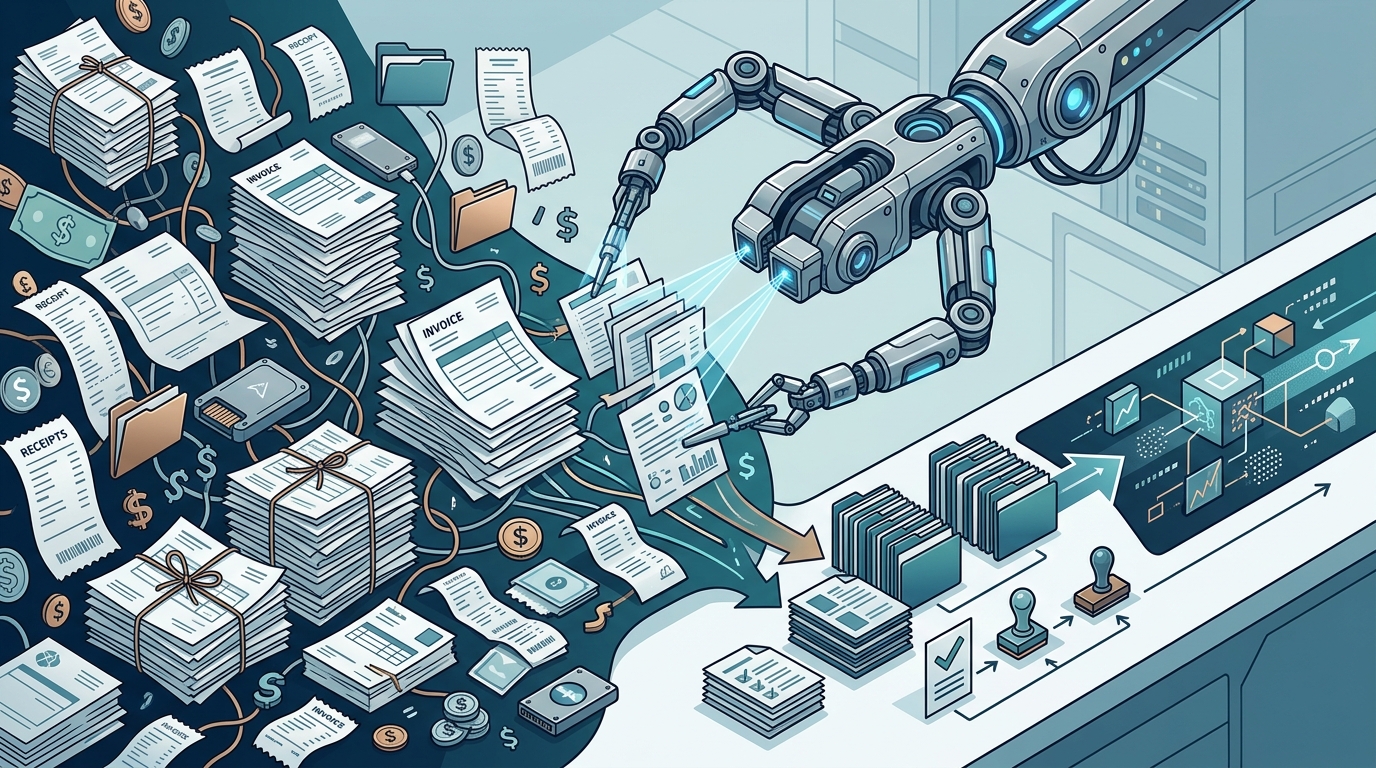
The reconciliation process begins with data ingestion. Agents pull data from custodians, banks, and ledgers, consolidating disparate sources into a unified format. This step is critical for ensuring that all relevant information is available for analysis. The agents then proceed to the matching phase, where they auto-match positions, cash, and transactions with high precision.
When discrepancies occur, the investigation phase kicks in. Agents research breaks, chase source documents, and propose resolutions based on historical data and predefined rules. This automated investigation reduces the need for manual intervention, allowing human teams to focus on complex exceptions that require judgment. The final step is reporting, where a clean, auditable close is delivered with a full reasoning trail.
Enterprise integrations ensure that these agents work seamlessly with existing systems. Connections to platforms like NetSuite, Sage Intacct, QuickBooks, Microsoft Dynamics, Bill.com, and Ramp allow for smooth data flow. This interoperability is essential for family offices that rely on a mix of specialized and general-purpose financial tools. The agents adapt to the existing tech stack, minimizing disruption and maximizing adoption.
Security and Compliance Standards
Security is paramount in family office operations. Aetherix Systems maintains rigorous compliance with global data protection regulations, including GDPR, UAE PDPL, EU AI Act, HIPAA, and CCPA. This multi-jurisdictional approach ensures that data is protected wherever it is processed or stored.
The company holds SOC 2 Type II and ISO/IEC 27001:2022 certifications, demonstrating a commitment to enterprise-grade security. Role-based access, audit trails, and encryption at rest and in transit are standard features. These measures protect sensitive financial data from unauthorized access and ensure that all operations meet the highest industry standards.
Data residency is another critical consideration. With three data residency regions available, family offices can ensure that their data remains within specific geographic boundaries, complying with local regulations. This flexibility is essential for offices operating across borders, where data sovereignty laws may vary. The compliance framework is continuously updated to reflect changes in global regulations, ensuring ongoing adherence.
Manual vs. Automated Reconciliation
Understanding the difference between manual and automated reconciliation is key to appreciating the value of AI agents. The table below summarizes the core distinctions.
| Feature | Manual Reconciliation | AI Agent Automation |
|---|---|---|
| Processing Speed | Days to weeks | Real-time |
| Error Rate | High due to fatigue | Near zero |
| Audit Trail | Fragmented | Full and immutable |
| Exception Handling | Manual investigation | Autonomous resolution |
| Scalability | Limited by staff | Unlimited |
Manual processes are inherently limited by human capacity. As transaction volumes grow, so does the risk of errors and delays. AI agents, on the other hand, scale effortlessly, handling thousands of documents daily with accuracy rates that exceed human operators. This scalability is crucial for family offices that are expanding their operations or managing increasing complexity.
Key Takeaways
- AI agents automate the full reconciliation lifecycle, from data ingestion to exception resolution.
- Autonomous operations reduce the time to close by weeks, providing faster financial insights.
- Every action is logged with a full audit trail, ensuring complete transparency and compliance.
- Enterprise integrations allow seamless connection with NetSuite, Sage Intacct, and other major platforms.
- Security is guaranteed through SOC 2, GDPR, and HIPAA compliance frameworks.
- Agents handle complex tasks like intercompany eliminations and multi-entity netting automatically.
- Real-time monitoring provides visibility into agent performance and operational efficiency.
Frequently Asked Questions
How do AI agents handle invoice discrepancies?
Agents investigate breaks by researching source documents and proposing resolutions based on predefined rules and historical data. This autonomous investigation reduces the need for manual intervention.
Is the reconciliation process fully auditable?
Yes, every action taken by the agents is logged with a full reasoning trail. This ensures that all decisions are transparent and can be reviewed for compliance purposes.
Which financial systems does Aetherix integrate with?
Aetherix integrates with major platforms including NetSuite, Sage Intacct, QuickBooks, Microsoft Dynamics, Bill.com, and Ramp, ensuring seamless data flow.
What security certifications does Aetherix hold?
Aetherix maintains SOC 2 Type II, ISO/IEC 27001:2022, GDPR, UAE PDPL, EU AI Act, HIPAA, and CCPA compliance, ensuring rigorous data protection.
Can AI agents handle intercompany reconciliations?
Yes, agents are designed to handle intercompany eliminations, multi-entity netting, and GL-to-subledger matching across complex organizational structures.
How long does it take to deploy AI agents?
Deployment is typically measured in weeks, not months, due to the pre-built agent orchestration and integration capabilities that streamline the onboarding process.
Do AI agents replace human workers?
Agents augment human teams by handling repetitive and rule-based tasks, freeing staff to focus on strategic analysis and complex decision-making.
Next Steps
Transform your family office's financial operations with autonomous AI agents. Book a scoping call to see how Aetherix Systems can streamline your reconciliation processes. Visit our contact page to schedule a demo and learn more about our services. Explore our insights for more industry expertise.