

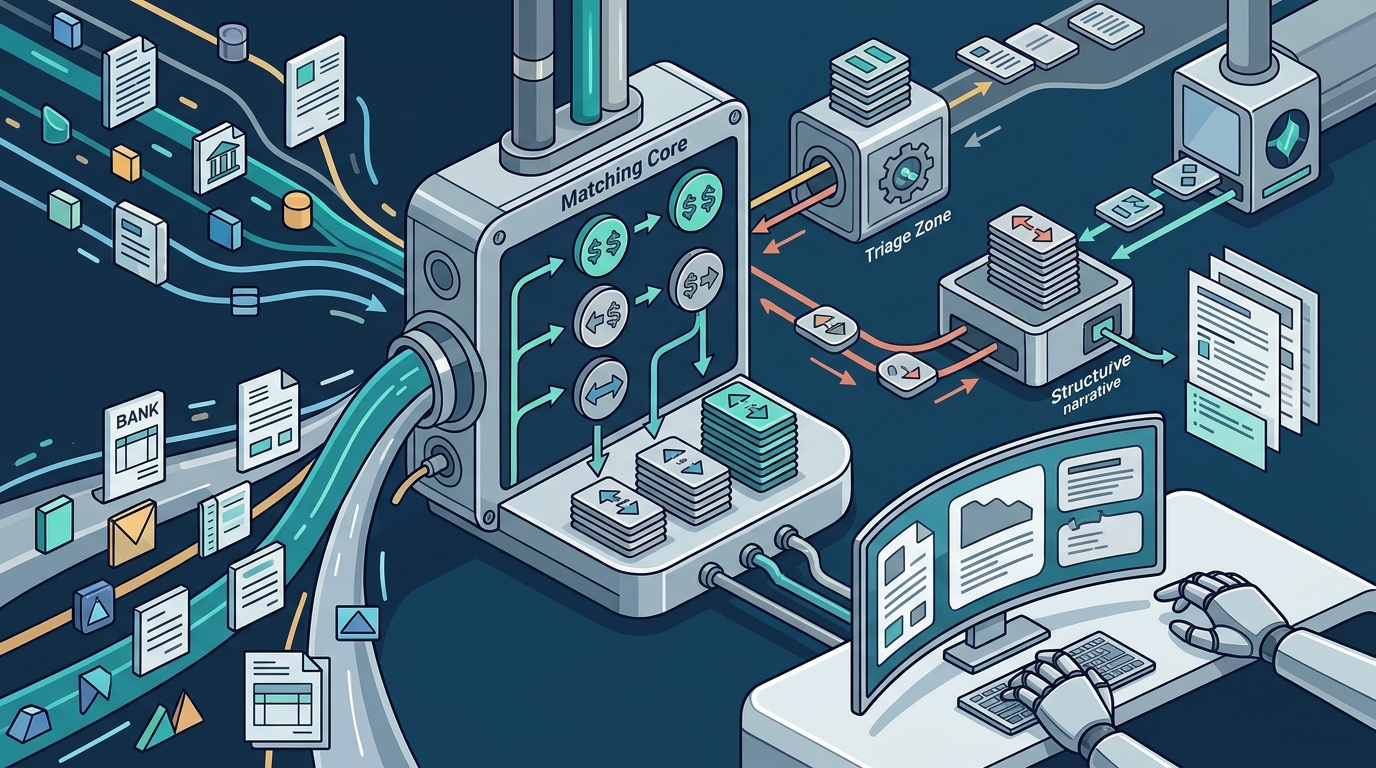
AI agents automate reconciliation by continuously matching transactions, triaging exceptions, and drafting narratives for human review. Aetherix Systems builds these agentic workflows for finance teams, ensuring that agents handle the heavy lifting of data matching while humans retain oversight for materiality and final approval. This approach reduces manual effort and improves audit readiness without compromising control. For additional details, review the Project not found.
The Shift from Rules to Agentic Workflows
Traditional reconciliation relies on static rules. Rules-based matching is a method where predefined logic flags discrepancies based on fixed criteria. While effective for simple matches, these systems struggle with complex, unstructured data. They often generate high volumes of false positives, forcing analysts to spend hours on manual investigation. according to Agentic AI for For additional details, review the Frequently Asked Questions.
Agentic AI changes this dynamic. Agentic AI is a system architecture where AI agents can plan, execute, and adapt to achieve a specific goal. In finance, these agents do not just flag errors; they investigate them. They can query multiple data sources, compare ledger entries against bank statements, and propose resolutions. This shift moves the workflow from passive detection to active resolution. For additional details, review the About.
The implication for finance operations is significant. Teams can focus on high-value judgment calls rather than repetitive data entry. By automating the investigation phase, organizations reduce the time spent on routine reconciliation tasks. This allows staff to handle complex exceptions that require human context and policy knowledge.
Core Functions of Reconciliation Agents
Reconciliation agents perform several distinct functions within a finance stack. First, they handle transaction matching. This involves comparing data from general ledgers, subledgers, and bank feeds. Agents use fuzzy logic and semantic understanding to match items that may not align perfectly in format or naming conventions.
Second, agents manage exception triage. When a match fails, the agent categorizes the exception. It determines whether the issue is a timing difference, a data entry error, or a genuine discrepancy. This categorization helps prioritize the work queue. Analysts see the most critical items first, improving throughput. according to Agentic AI for
Third, agents draft reconciliation narratives. These are written explanations for why a discrepancy occurred and how it was resolved. Drafting these narratives is time-consuming for humans. Agents can generate them automatically, saving significant hours. However, a human must always review and approve these narratives before they are finalized.
Human Oversight and Control in Agentic Systems
Autonomy in finance requires strict guardrails. Human-in-the-loop is a design pattern where AI agents propose actions, but humans approve them. In reconciliation, agents propose journal entries or adjustments. A named client employee reviews these proposals and posts them to the system. This ensures that no financial record is altered without human accountability.
Control is maintained through materiality thresholds. Agents are configured to flag items above a certain value for immediate human review. Items below this threshold may be auto-resolved if they meet strict confidence criteria. This tiered approach balances efficiency with risk management. It ensures that high-impact errors are always caught by a human.
The implication is a safer adoption path. Finance leaders can start with low-risk, high-volume tasks. As trust in the system grows, they can expand the scope of agent autonomy. This gradual rollout minimizes disruption and builds confidence in the technology.
Integration with Existing Finance Stacks
Agentic systems must integrate seamlessly with existing infrastructure. Aetherix Systems designs agents to connect with major ERP and accounting platforms. These integrations allow agents to read and write data in real-time. They can pull data from general ledgers, subledgers, and third-party bank feeds. This connectivity is essential for accurate and timely reconciliation.
The implication is that technology is only part of the solution. Process and data maturity are equally important. Finance teams must be prepared to clean and maintain their data. This foundational work ensures that agents can operate effectively and provide reliable results.
Key Takeaways
- Agentic AI moves reconciliation from passive flagging to active investigation and resolution.
- Human oversight remains critical; agents propose, but humans approve and post entries.
- Materiality thresholds help balance automation efficiency with risk management.
- Data quality and governance are prerequisites for successful agentic deployment.
- Integration with existing ERP and accounting platforms is essential for real-time accuracy.
- Gradual rollout of agent autonomy builds trust and minimizes operational disruption.
Frequently Asked Questions
What is the difference between rules-based reconciliation and agentic AI?
Rules-based systems use fixed logic to flag discrepancies. Agentic AI systems can investigate, adapt, and propose resolutions using dynamic reasoning.
Do AI agents post journal entries automatically?
No. In Aetherix Systems' implementation, agents propose entries, but a named human employee reviews and posts them to ensure accountability.
How does human oversight work in agentic reconciliation?
Humans review agent proposals, especially for high-value items. They approve or reject actions, maintaining final control over financial records.
What data is needed for reconciliation agents?
Agents need access to general ledgers, subledgers, and bank statements. Clean, structured data is essential for accurate matching and analysis.
Can agents handle complex, unstructured data?
Yes. Agentic systems use semantic understanding to process unstructured data, such as free-text notes or irregular formats, which rules-based systems often miss.
Conclusion
AI agents are transforming finance operations by automating the complex tasks of reconciliation. They handle matching, triage, and narrative drafting, freeing human teams to focus on high-value oversight. Aetherix Systems provides these agentic workflows, ensuring that automation enhances control rather than compromising it. To explore how agentic AI can streamline your reconciliation processes, contact Aetherix Systems. Learn more: Project not found.