

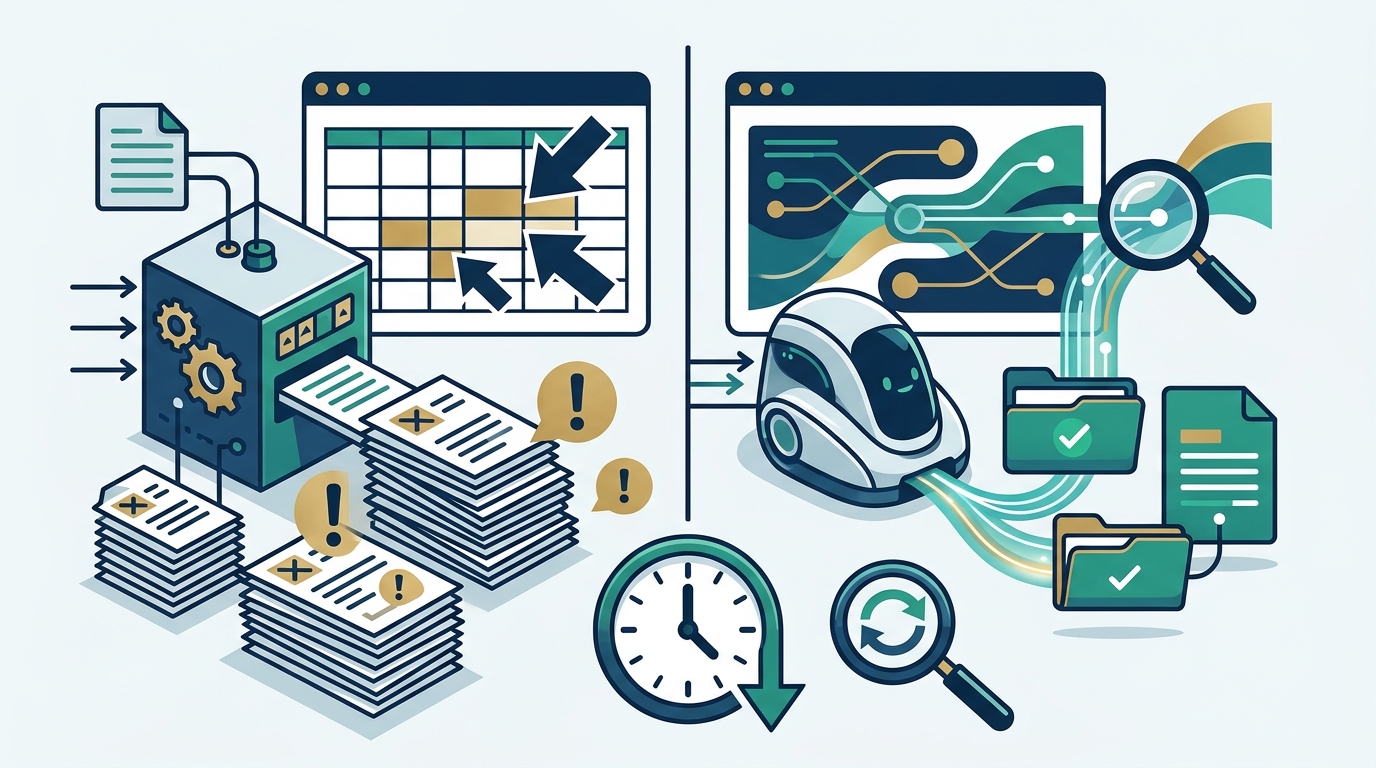
NAV reconciliation software powered by artificial intelligence is shifting from rigid rule-based matching to autonomous investigative workflows. Traditional systems flag discrepancies, but modern AI agents investigate root causes and propose resolutions. This transition reduces manual effort and accelerates fund closing cycles. Aetherix Systems, a Dubai-based AI engineering firm, builds these production-grade systems for financial institutions across the GCC and US. For additional details, review the Project not found.
The Shift from Rules to Reasoning
For fund administrators, this means fewer manual reviews. The software handles the investigation. Human analysts review the proposed journal entries. This division of labor improves throughput. It also reduces the cognitive load on finance teams. The system learns from accepted and rejected resolutions over time. according to Marketing Submission Recommendations For additional details, review the Customer Experience.
Handling Complex Data Structures
NAV calculations involve complex data structures. Custodian feeds, broker statements, and general ledgers often use different formats. Traditional software struggles with unstructured or semi-structured data. Data normalization is the process of converting diverse data sources into a unified format for analysis. AI models excel at this task. They can parse PDFs, emails, and API responses. They extract relevant fields without brittle parsing scripts. For additional details, review the Frequently Asked Questions.
This capability is critical for multi-asset funds. A single fund may hold equities, fixed income, and derivatives. Each asset class has different reconciliation logic. AI systems adapt to these variations. They identify the correct matching logic for each instrument. This reduces the need for custom coding for every new asset type. It allows the software to scale with the fund's complexity. For additional details, review the About.
Audit Trails and Explainability
Regulators and auditors require clear evidence of how numbers are derived. Black-box AI models are problematic in this context. Explainable AI is a framework that provides transparent reasoning for every automated decision. In NAV reconciliation, this means the system logs why it matched two transactions. It records the confidence score and the data points used. This creates a complete audit trail.
Aetherix Systems emphasizes this transparency in its architecture. Every action taken by an AI agent is logged. The system provides a narrative explanation for each proposed journal entry. This allows auditors to verify the logic. It builds trust in the automation. Without this layer, AI adoption in regulated finance remains limited. Explainability is not a feature; it is a requirement.
Integration with Existing Stacks
Integration depth matters. Shallow integrations only move data. Deep integrations allow the reconciliation engine to trigger actions in the ERP. For example, it can post a proposed journal entry directly to the general ledger. This reduces manual data entry. It also minimizes the risk of transcription errors. The software acts as a bridge between disparate systems.
Operational Efficiency and Cost
The primary driver for adopting AI in NAV reconciliation is cost reduction. Manual reconciliation is labor-intensive. It requires skilled analysts to spend hours on repetitive tasks. Operational efficiency is the measure of output relative to input resources. AI systems reduce the time spent on routine matching. They allow analysts to focus on complex exceptions. This improves the cost-to-serve ratio for fund administrators.
The impact is significant for multi-fund platforms. A single team may manage dozens of funds. Scaling headcount to match fund growth is expensive. AI systems scale with data volume, not headcount. This creates a more predictable cost structure. It allows firms to grow their AUM without proportional increases in operational costs. The efficiency gains are realized quickly after deployment.
Key Takeaways
- Agentic AI moves reconciliation from flagging exceptions to investigating and resolving them.
- Data normalization capabilities allow AI to handle diverse and unstructured financial data.
- Explainable AI provides the audit trails required by regulators and auditors.
- API-first architecture enables deep integration with existing ERPs and custodians.
- Operational efficiency improves as AI handles routine tasks, freeing analysts for complex work.
- Human oversight remains critical; AI proposes, but humans dispose.
Frequently Asked Questions
Does AI replace human analysts in NAV reconciliation?
No. AI handles routine matching and investigation. Human analysts review proposed resolutions and handle complex exceptions. The role shifts from manual data entry to oversight and judgment. according to Frontiers Artificial intelligence
How does AI handle unstructured data like PDFs?
AI models use natural language processing to extract relevant fields from documents. They normalize this data into a structured format for reconciliation. This eliminates the need for brittle parsing scripts.
Is AI reconciliation software secure?
Yes, when built with security best practices. Reputable vendors use encryption, access controls, and audit logs. Compliance with standards like ISO 27001 ensures data protection.
What is the role of explainability in AI reconciliation?
Explainability provides a transparent record of why the AI made a specific decision. This is essential for audit trails and regulatory compliance. It builds trust in the automated process.
Can AI reconciliation software integrate with existing ERPs?
Conclusion
The landscape of NAV reconciliation is changing rapidly. AI is moving from a novelty to a core operational tool. The key shifts are in reasoning, data handling, and explainability. Firms that adopt these technologies gain a competitive edge. They reduce costs and improve accuracy. Aetherix Systems builds these systems for financial institutions. We focus on production-grade AI that integrates with existing stacks. To explore how AI can transform your reconciliation process, contact Aetherix Systems. Learn more: Project not found.